
Keeping your baby’s toys clean is one of the easiest ways to protect their health. Since babies explore the world by touching, chewing, and tasting everything around them, their toys can quickly collect germs, bacteria, and dirt. Without regular cleaning, these germs can lead to colds, stomach bugs, and other illnesses.
The good news is that learning how to clean and sanitize baby toys doesn’t have to be complicated. With a few simple steps and the right routine, you can keep your baby’s favorite toys fresh, safe, and ready for playtime.
In this guide, we’ll explain why cleaning matters, how often to do it, and the best methods for different types of baby toys.
Why Cleaning Baby Toys Is Important
Baby toys are constantly exposed to:
- Drool and saliva
- Food spills and milk residue
- Dust and pet hair
- Germs from public places
- Mold from moisture
When toys aren’t cleaned regularly, bacteria can build up quickly. This is especially true for teething toys and bath toys that stay wet. Cleaning and sanitizing toys helps prevent sickness and keeps your baby’s play environment safe.
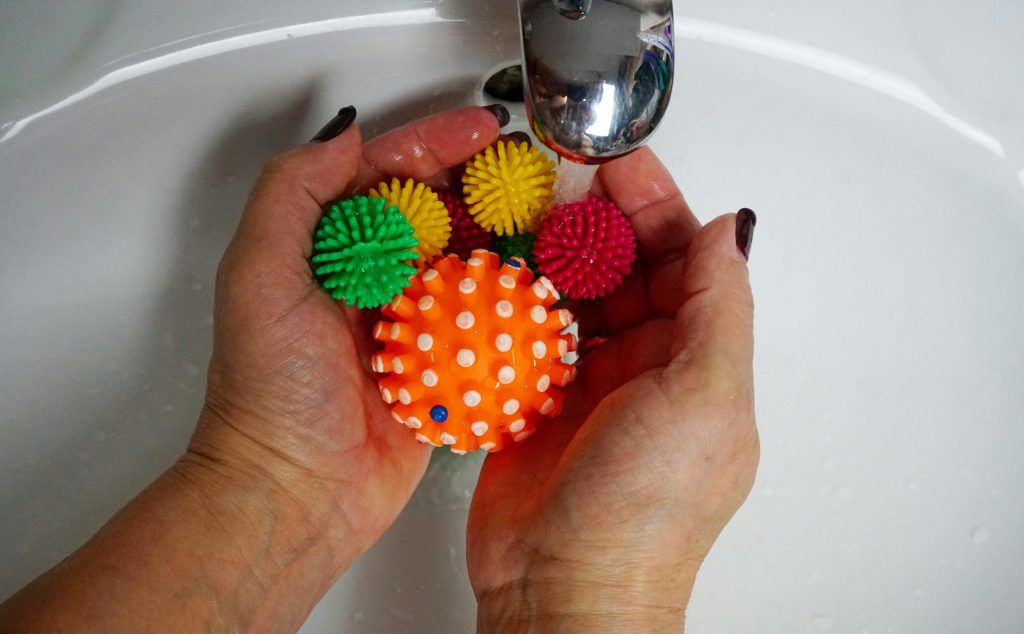
Parent organizing and cleaning baby toys in sink
How Often Should You Clean Baby Toys?
How often you clean toys depends on how they’re used. Here is a simple schedule to follow:
- Daily: Teething toys and toys that go in the mouth
- Weekly: Plush toys and large plastic toys
- Immediately: After illness, public outings, or heavy drooling
If your baby drops a toy on the floor in a store or restaurant, it’s best to clean it as soon as possible before letting them use it again.
How to Clean Plastic and Silicone Toys
Plastic and silicone toys are the easiest to clean and sanitize. Most teething rings, stacking toys, and bath toys fall into this category.
Method 1: Warm Soapy Water
- Fill a sink or basin with warm water
- Add a few drops of mild dish soap
- Scrub toys with a soft sponge or brush
- Rinse thoroughly
- Let air dry on a clean towel
This method works well for everyday cleaning.
Method 2: Dishwasher (If Safe)
Many plastic and silicone toys are dishwasher-safe. Place them on the top rack and use a gentle cycle. Always check the manufacturer’s instructions first.
cleaning
How to Clean Plush and Fabric Toys
Stuffed animals, fabric books, and soft toys require special care.
Machine-Washable Plush Toys
Some plush toys can be washed in the washing machine.
Steps:
- Place toys in a laundry bag or pillowcase
- Use cold water and mild detergent
- Select a gentle cycle
- Air dry when possible
Avoid high heat, which can damage fabric and stuffing.
Non-Washable Plush Toys
For toys that can’t be washed:
- Mix warm water with mild soap
- Dampen a cloth
- Gently wipe the surface
- Let dry completely
Never soak toys that contain electronics or sound devices.
Little girl playing with washing machine toy
How to Sanitize Baby Bath Toys
Bath toys are more likely to grow mold because water gets trapped inside. Regular sanitizing is very important.
Vinegar Method
- Mix equal parts white vinegar and warm water
- Soak toys for 15–20 minutes
- Rinse thoroughly
- Squeeze out water
- Air dry fully
Bleach Method (Occasional Use)
For deep cleaning:
- Mix 1 teaspoon bleach with 1 gallon water
- Soak for 5 minutes
- Rinse very well
- Let dry completely
Use this method only occasionally and never mix bleach with other cleaners.
How to Sanitize Baby Toys Safely
Sanitizing goes one step further than cleaning by killing germs and bacteria.
Safe sanitizing options include:
- Steam sterilizers
- Boiling (for heat-safe toys only)
- Vinegar solution
- Baby-safe disinfectant wipes
Always avoid harsh chemicals that are not labeled baby-safe.
Extra Tips for Keeping Baby Toys Clean
Here are a few easy habits that make cleaning easier:
Rotate Toys
Keep only a few toys out at a time. Store the rest and rotate weekly. This reduces buildup and makes cleaning manageable.
Store Toys Properly
Use bins, baskets, or shelves to keep toys off the floor. Avoid storing toys in damp areas.
Check for Damage
Throw away toys that are cracked, peeling, or broken. These can trap bacteria and become unsafe.
Wash Your Hands First
Clean hands help keep toys cleaner. Wash your hands before handling freshly cleaned toys.
When Should You Replace Baby Toys?
Sometimes cleaning isn’t enough. Replace toys if they:
- Have mold that won’t come out
- Are cracked or leaking
- Have loose parts
- Smell bad after cleaning
Safety always comes first.
Final Thoughts on Cleaning Baby Toys
Keeping baby toys clean doesn’t have to be overwhelming. With a simple routine and the right methods, you can protect your baby’s health and make playtime safer every day.
Focus on toys that go in the mouth, clean bath toys regularly, and build cleaning into your weekly schedule. A few minutes of effort can help prevent sickness and give you peace of mind.
A clean toy is a happy toy, and a healthier baby makes everything easier.